Teardrop pallet rack is the most common style of selective rack in North America. The teardrop-shaped holes punched into the upright column give the system its name and let beam connectors snap in without bolts. Buyers see "teardrop" on a used rack listing and assume it will fit whatever they already have. That assumption is wrong often enough to be dangerous.
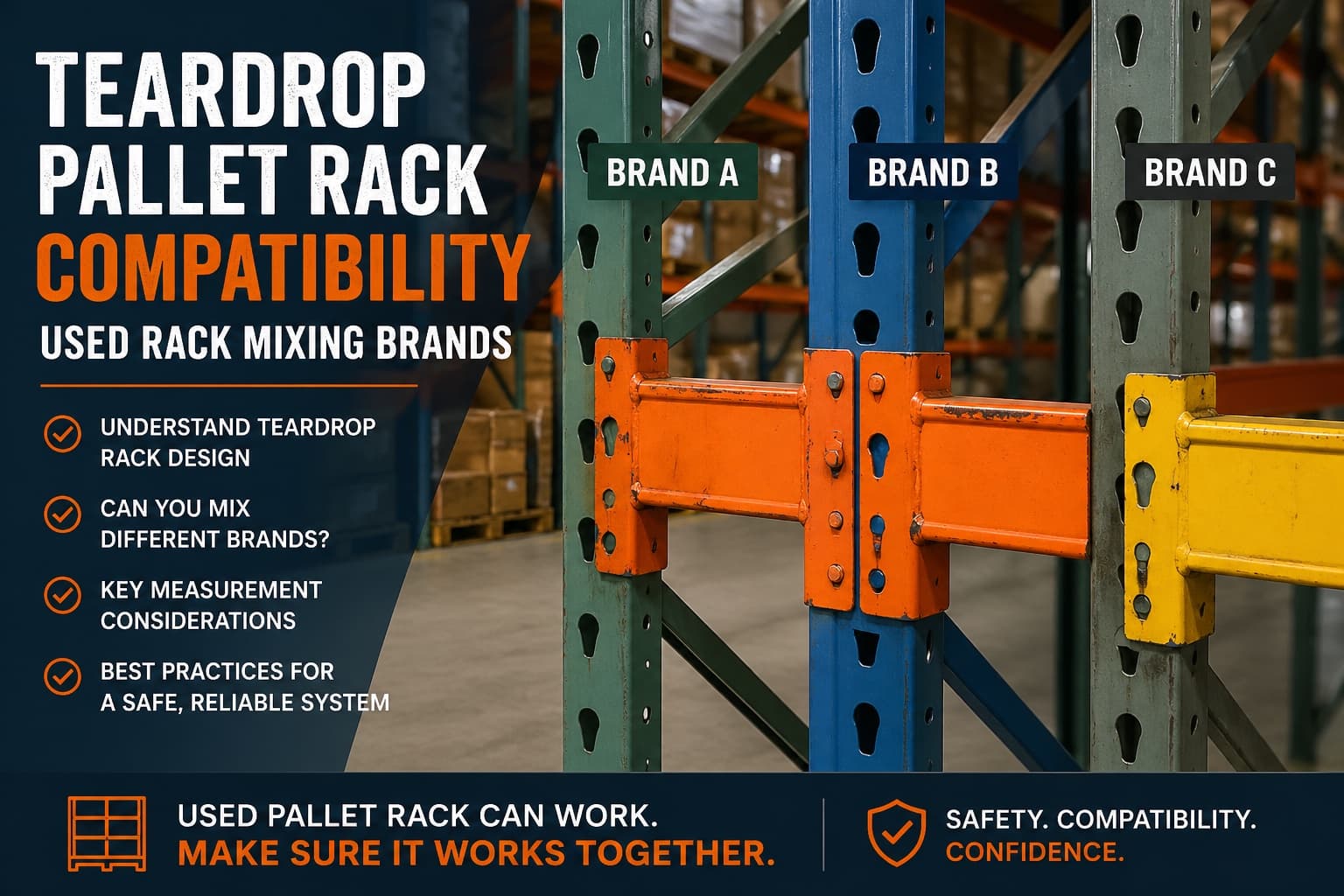
Teardrop is a connection style, not a single specification. Different manufacturers cut the teardrop with slightly different geometry, use different steel thicknesses, and engineer their beams for different load capacities. A teardrop beam from one brand can physically click into another brand is upright and look perfectly fine. That does not mean the connection is rated to hold the load.
What Teardrop Actually Means
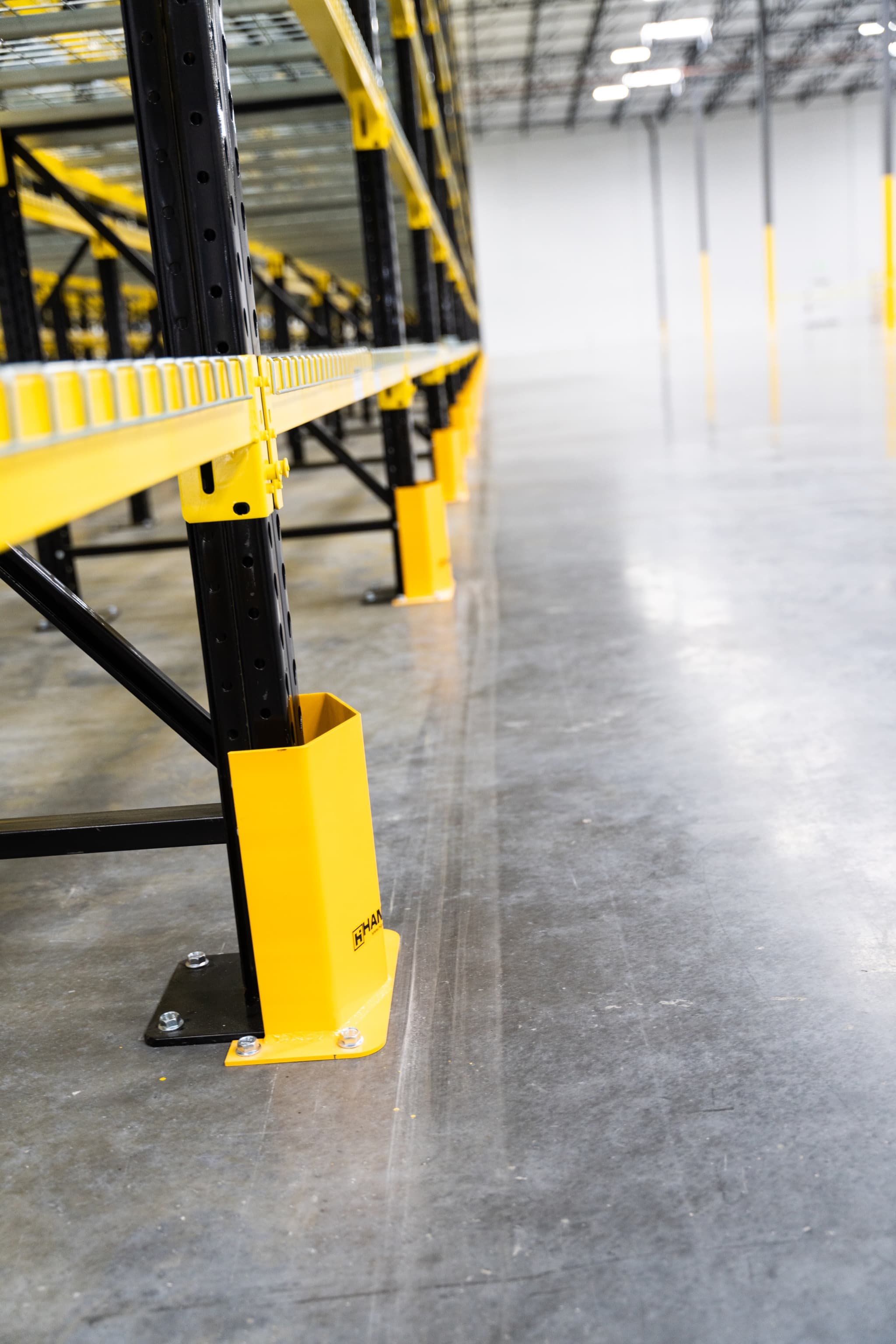
Teardrop refers to a punched hole pattern on the upright column. The holes are shaped like an upside-down teardrop, narrow at the top and wide at the bottom. Beam connectors have matching tabs that drop into the wide bottom of the hole and lock when the beam is pushed down.
The teardrop pattern was popularized by Interlake (later Mecalux) and has been widely copied. Manufacturers like Steel King, Ridg-U-Rak, Hannibal, Unarco, and many others all make teardrop-style rack. They are similar but not identical.
Why "Universal" Is Misleading
When a used rack dealer says teardrop is universal, what they usually mean is that the connector will physically fit. That is true most of the time. What they leave out is whether the connection is engineered to the same load rating across brands.
Beam capacity is determined by the beam profile, the connector design, and the column thickness it is connecting to. Mix a heavy-duty beam from one brand with a light-duty column from another, and the connection becomes the weakest link. The capacity drops to whatever the weakest component is rated for, and sometimes lower.
When Mixing Brands Is Acceptable
There are situations where mixing teardrop brands is acceptable, but only after engineering review.
- When the brands are confirmed compatible by a structural engineer who has reviewed the specific components.
- When the load is well below the rated capacity of either component, with a generous safety margin.
- When the mix is a small portion of the system and the rest is single-source.
- When the components are part of a documented matched system from the same manufacturer family (for example, certain Interlake and Mecalux products).
When Mixing Brands Is Not Acceptable
These situations are deal-breakers regardless of how good the price is on the used rack.
- You cannot identify the brand or model of the existing rack. No engineer can rate a connection between an unknown column and a new beam.
- The teardrop hole pattern is visibly different in size or spacing.
- The column gauge or profile is clearly different (one is heavier or lighter steel).
- The connector tab geometry is different. Even small differences change the load path.
- The system will be installed in a high-pile or seismic application and the engineer cannot certify the mixed connection.
How Used Rack Goes Wrong
The most common scenario we see: a buyer adds beams to an existing system. They find used teardrop beams cheap online, the beams click into the existing columns, and the rack is loaded. Six months later something fails or a fire marshal inspection flags the system as unrated.
Now the buyer has to either replace the beams (paying twice) or get an engineer to certify the mix (which often is not possible). What seemed like a 40 percent cost saving turns into a project that costs more than buying matched new rack from the start.
How to Buy Used Rack Safely
Used pallet rack can be a great value when you buy it right. The rules:
- Buy matched-set used rack from a single source whenever possible. Same brand, same era, same dealer.
- Get the manufacturer name and model number documented in writing.
- Have a structural engineer review the system if it will be permitted or load-rated.
- Inspect every component for damage. Bent beams, twisted columns, and cracked welds are not bargains at any price.
- Avoid mystery rack. If nobody can tell you what brand it is, walk away.
Source 4 and Used Rack
We sell used pallet rack as matched sets from documented sources. Every used rack system we install gets the same engineering review as new rack. Bob Sharifi, PE, certifies the load ratings before the racks are loaded.
If you are shopping used pallet rack and unsure whether the components are truly compatible, call us at (702) 291-9520. Send us photos and any brand markings you can find. We will tell you what you have and whether it can be safely expanded or mixed with other components.